


Price: $9.99 - $7.99
(as of Apr 04, 2025 17:54:12 UTC - Details)
The Best Way to Store Potatoes: A Comprehensive Guide
Introduction
When it comes to storing potatoes, many people underestimate the importance of proper techniques. Knowing the best way to store potatoes can significantly extend their shelf life and maintain their flavor and texture. In this article, we’ll explore various methods for potato storage, focusing on long-tail keywords like "how to store potatoes in a cool place," "best containers for storing potatoes," and "potato storage tips." Whether you’re a seasoned cook or a kitchen novice, this guide will provide you with practical insights to ensure your potatoes remain fresh and delicious for as long as possible.
Understanding the Basics of Potato Storage
How to Store Potatoes in a Cool Place
The key to storing potatoes is keeping them in a cool, dark, and well-ventilated environment. Potatoes thrive at temperatures between 45°F and 50°F. Avoid putting them in the refrigerator, as colder temperatures can cause their starches to convert to sugars, resulting in a sweet taste and undesirable texture.
To achieve this, consider using a basement or a pantry that doesn’t get too hot. If you don’t have access to a cool space, placing them in a paper bag can help absorb moisture while allowing air circulation. Remember, keeping potatoes away from direct sunlight is crucial to prevent sprouting and greening.
Best Containers for Storing Potatoes
When it comes to choosing the right container for your potatoes, ventilation is essential. Opt for breathable materials like burlap sacks or mesh bags. These options allow air to flow around the potatoes, reducing the risk of moisture buildup, which can lead to rot.
Avoid plastic bags, as they trap moisture and can cause potatoes to spoil faster. If you prefer a more structured option, wooden crates or baskets can also work well. Just ensure they have holes or slats for ventilation. This way, you’ll help your potatoes stay fresh longer.
Potato Storage Tips for Longevity
To maximize the shelf life of your potatoes, there are a few additional tips you should consider. First, inspect your potatoes regularly and remove any that show signs of spoilage, such as soft spots or sprouting. This will prevent the spread of rot to healthy potatoes.
Another tip is to store potatoes with an apple. Apples emit ethylene gas, which can help slow down the sprouting process. Just be cautious about how many apples you use, as too many can cause the potatoes to spoil quicker.
The Impact of Humidity on Potato Storage
Humidity plays a critical role in how well your potatoes are stored. High humidity can lead to mold growth and rot, while low humidity can cause potatoes to dry out. Ideally, aim for a humidity level between 85% and 90%.
If you live in a particularly humid area, consider using a dehumidifier in your storage space. Conversely, if the air is too dry, placing a damp cloth near your potatoes can help maintain adequate moisture levels.
Understanding Potato Varieties and Their Storage Needs
Different types of potatoes have varying storage requirements. For instance, waxy potatoes like red potatoes tend to have a shorter shelf life compared to starchy varieties like Russets. Knowing the variety you have can help you determine the best storage methods.
Waxy potatoes are better suited for boiling and should be used within a week or two of purchase, while starchy potatoes can last for several weeks if stored properly. Always check the specific needs of the potato variety you have to ensure optimal storage conditions.
Signs Your Potatoes Have Gone Bad
It’s essential to know when your potatoes have past their prime. Look for signs of sprouting, which means they are trying to grow. While sprouted potatoes can still be eaten, you should cut off the sprouts before cooking.
Other signs of spoilage include a strong odor, excessive softness, or a greenish hue on the skin. If you notice any of these signs, it’s best to discard the affected potatoes to prevent any health risks.
Conclusion
In summary, knowing the best way to store potatoes involves understanding the right conditions, containers, and care techniques. By keeping your potatoes in a cool place, using the best containers, and following practical storage tips, you can enjoy fresh potatoes for longer. Regularly inspecting your potatoes and being aware of their specific needs will further enhance your storage success. With these insights, you can ensure that your potatoes remain a delicious staple in your kitchen for all your culinary creations.
By implementing these strategies, you can confidently store your potatoes, reducing waste and enjoying their flavor for weeks to come. Remember, proper storage is the key to maintaining the quality of this versatile vegetable.
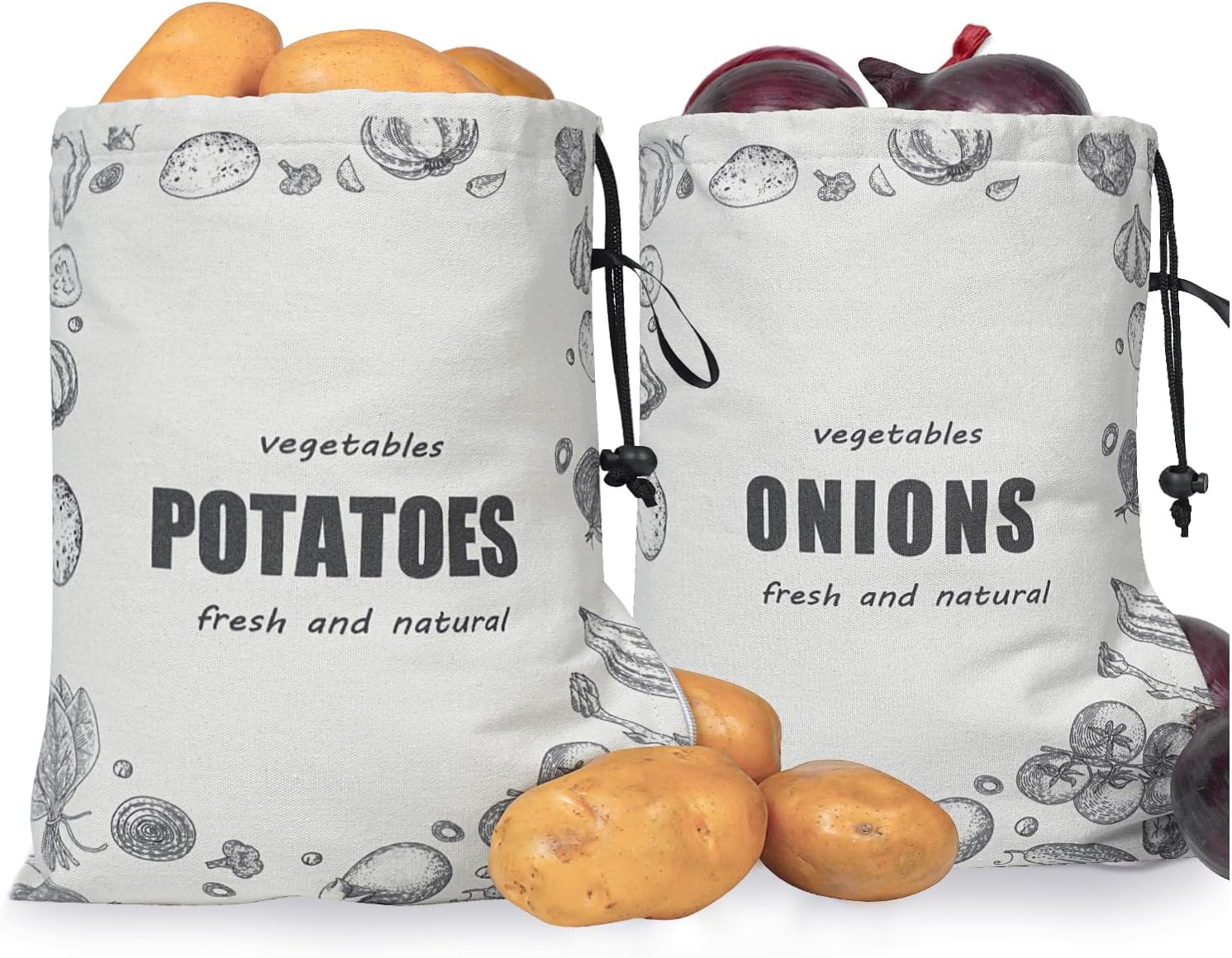
Potato Storage Fresh Longer - Featured with blackout lining, our potato storage bag can block out light and absorb moisture so that make your vegetables stay fresh for longer, also for onion storage. Our onions fresh bag is much better than the plastic bags storage, because these bag will extend the shelf life of your vegetables.
Convenient Design - Our onion bag has two separate openings which one is drawstring on the top, the other is side zipper (approximately 6.25" length) so that you can easily take out a few veggies from the bag. Featured with drawstring closure and portable hanging loop on the side, our potato bag is easy to carry and pack.
Great Size and Sturdy Material- Made of canvas outer material, our onion keeper is easy to clean and air dry. It is big enough( 16'' x 11.4'') to hold about 5lbs-8lbs root veggies, for which this potato sack is great for storing garlic, onions, and potatoes in the pantry.
Easy to Storage - Our rustic potatoes storage bags are easy to be folded up and put away when you don't need it. Compared with potato and onion storage bin, this fabric potato sacks are save more space.
Beautiful Decoration - Designed with unique patterns, our onion bags add farmhouse style for home and kitchen decor. You will get a potato bag and onion bag.